International Climate Negotiations
Hello CRAGgys,
Thanks for your patience during my extended break, first to Canada, then to Belém, Brazil.
I'm interrupting the regular CRAG programming for a report on COP30. See the end for local meeting updates.
I've had the privilege of attending international climate Conference of the Parties (COP) with groups of students since the 2019 meeting in Madrid. Every time is a new experience.
COP Report
What is COP?
COP is the Conference of the Parties to the United Nations Framework Convention on Climate Change (UNFCCC). It's the annual meeting where (nearly) all countries in the world gather to address the climate crisis. The primary mechanism of the treaty is the Paris Agreement, agreed in 2015. The UNFCCC treaty was universally adopted by all countries in the world. The United States has withdrawn from the Paris Agreement (one part of the treaty), effective Jan 27, 2026. The 30th COP (COP30) was hosted by Brazil in the northeastern city of Belém, November 10-21, 2025.
You can gain an interesting perspective by listening to ministers from each participating country state their views during the "high level segment" on Nov 17 and Nov 18. (Choose "agenda" to select which country to hear, and use "A" at bottom right of the video to select English.)
What happens at COP?
COP has been described as a three-ring circus.
- The primary focus of COP is the negotiations among countries on how they will cooperate to implement to goals of the Paris Agreement. The overarching goals are:
Holding the increase in the global average temperature to well below 2 °C
above pre-industrial levels and pursuing efforts to limit the temperature increase to 1.5 °C above pre-industrial levels, recognizing that this would significantly reduce the risks and impacts of climate change;
Increasing the ability to adapt to the adverse impacts of climate change and foster climate resilience and low greenhouse gas emissions development, in a manner that does not threaten food production; and
Making finance flows consistent with a pathway towards low greenhouse gas emissions and climate-resilient development.
The details of how to accomplish those goals are extremely difficult, especially when all countries have to agree by consensus.
- The second aspect of COP is information-sharing. Many countries and organizations sponsor pavilions and panel discussions where they promote their successes, highlight challenges, discuss science, and exchange ideas on climate resilience, adaptation, and finance. Some, like the World Health Organization, Cryosphere, and the Science for Action pavilions have recordings, others are more ephemeral. Japan likes to promote technology solutions, while the Forest Pavilion advocates for the inclusion of forests in the negotiations. The Indigenous Peoples' Pavilion hosted events in multiple languages. Michigan Tech alumna, Leigh Winoweicki spoke about soil health at the Action on Food HUB.

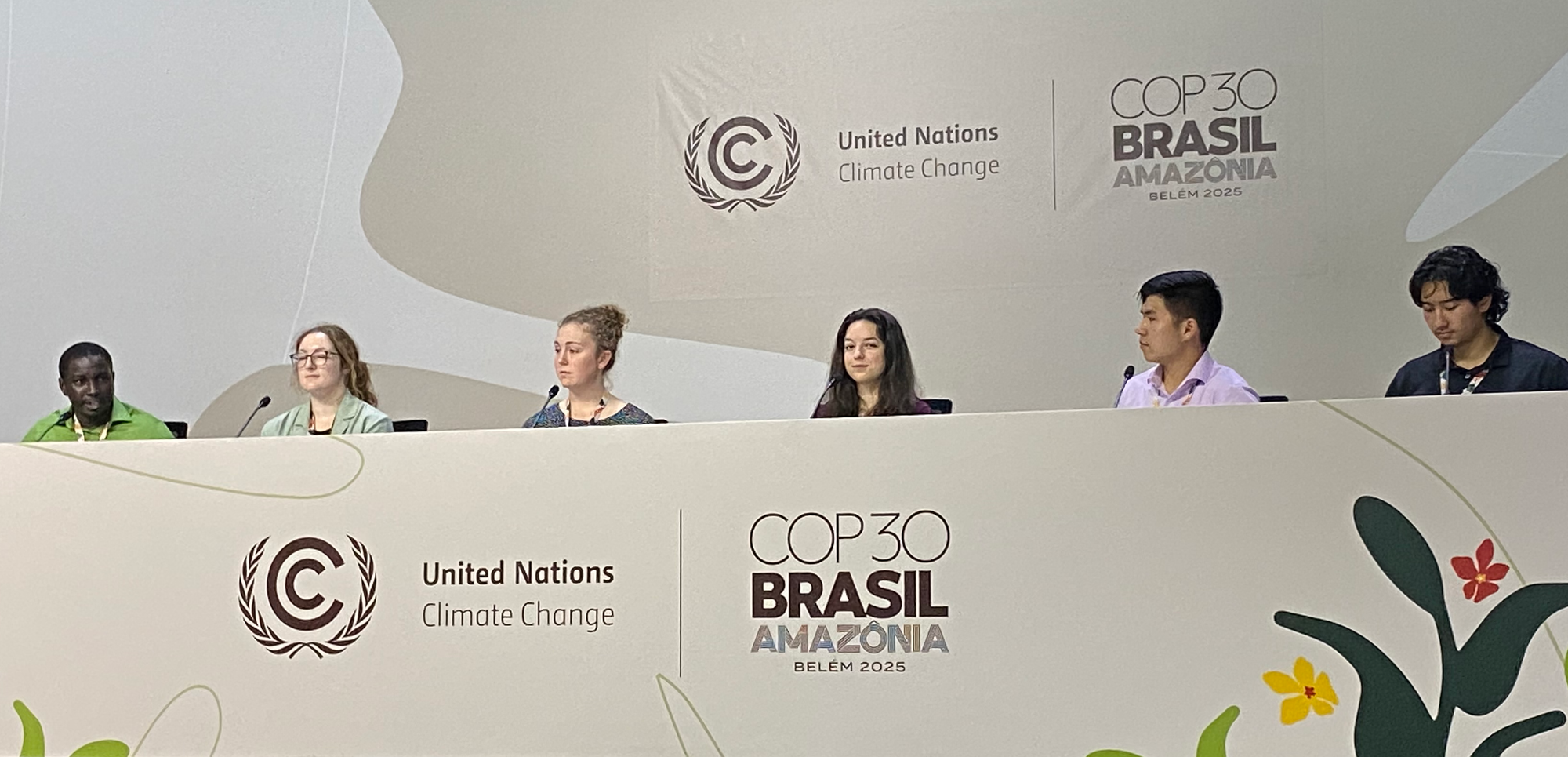
- Observer organizations have official status at COP. Observers are non-governmental organizations (NGOs) such as groups representing youth, indigenous peoples, women, education, environment, faith, peace and justice, trade unions, agriculture, and energy and and many others. Representatives from those groups can observe negotiations, participate in pavilion activities, and meet their colleagues from around the world. Their presence increases transparency of the process and brings the diverse opinions of the public into COP.
I attend COP with students from Michigan Tech because the university has observer status. We work closely with other observer universities: Boston University, Vanderbilt University, Tennessee State, Colorado State, and others. Our students (and alumni) typically contribute to panel discussions during COPs.
- Finally, the press is an important player at COP. News organizations cover the meeting, and ask probing questions during the daily press conferences.
Impressions of Belém
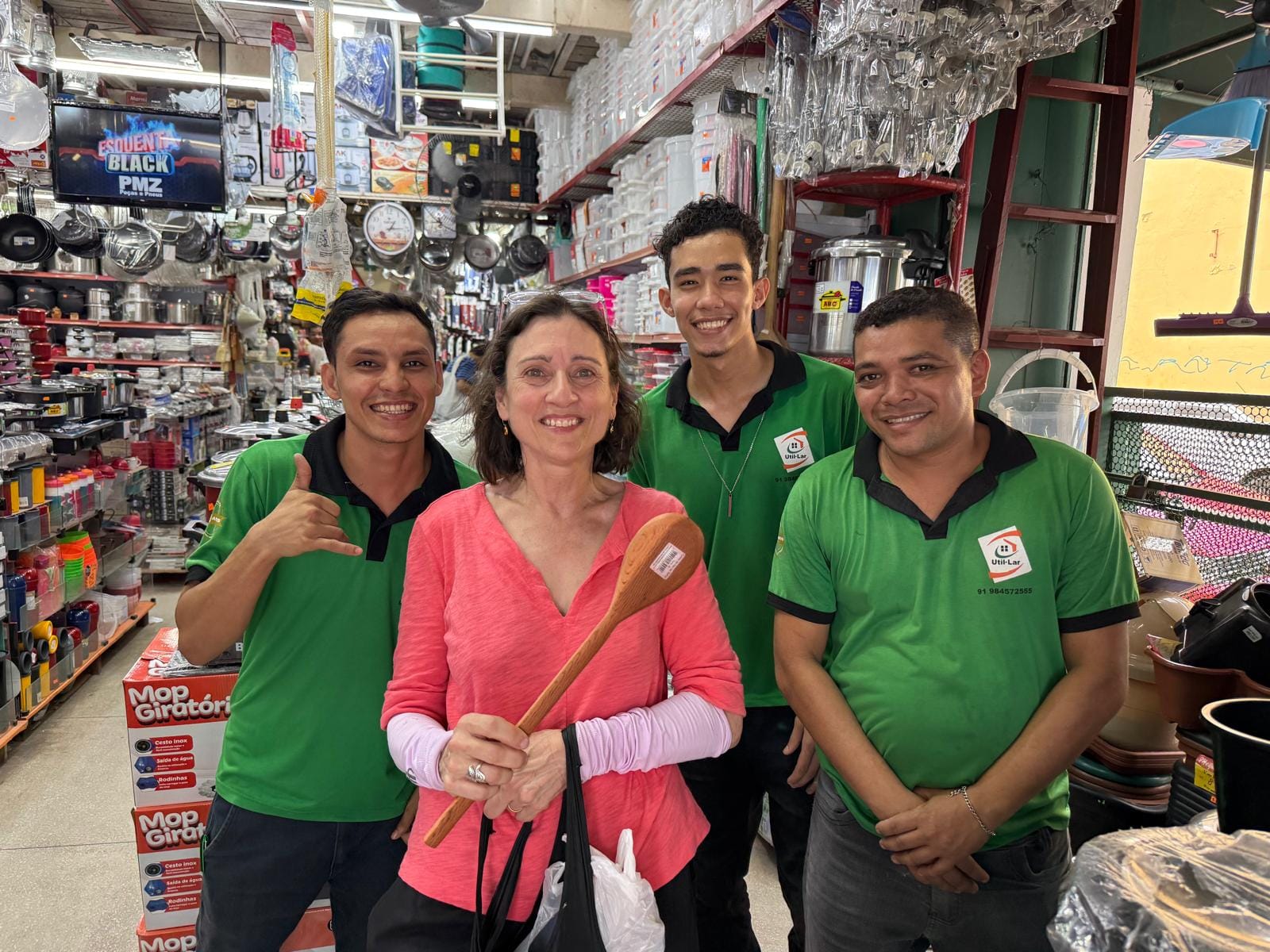
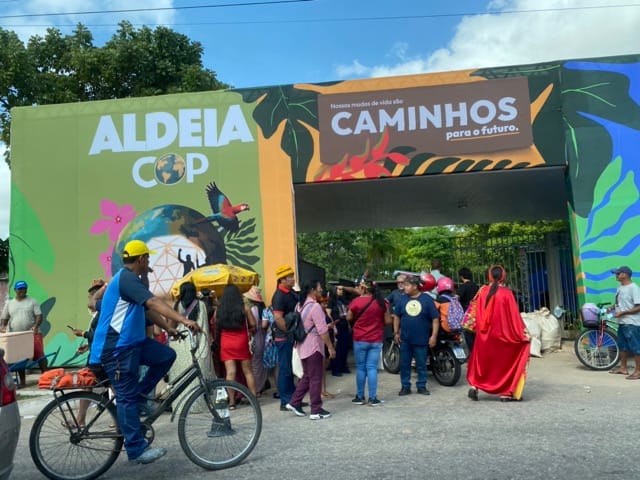
Belém. COP30 was hosted in the remote northeastern Para province of Brazil. The city of Belém resembles many rapidly developing urban areas around the world. Small storefronts selling auto parts, furniture, beauty supplies, fruit, and garden supplies line the streets. Modest two-story structures are interspersed with fancy new developments.
Upscale shopping malls sit next to vendors with pushcarts. The Ver-o-Peso market sells fish, meat, fruits, herbs and spices, and crafts. It spills into a sprawling street market that sells cheap clothing, shoes and electronics from the massive global stock of identical items. Enormous grocery stores sell junk food brands from around the world.
Small cobblestoned alleys open onto 6-lane roads, clogged with traffic; traffic patterns are inefficient, requiring frequent U-turns and diversions through apparent alleys. Motorbikes are ubiquitous, while many cars are modern; some are electric (BYD cars!). Sidewalks are an afterthought, crumbling or vanishing in some places, becoming lovely tree-covered walkways next to bike paths elsewhere. Spiffed-up tourist zones such as the old port, "Estação das Docas," attract evening crowds and neighborhood restaurants occupy the sidewalks.
As in much of Latin America, most dwellings present a rather armored appearance to the street, with barred windows, iron gates, and high protective walls. Gutters are deep to accommodate the frequent torrential tropical rains.
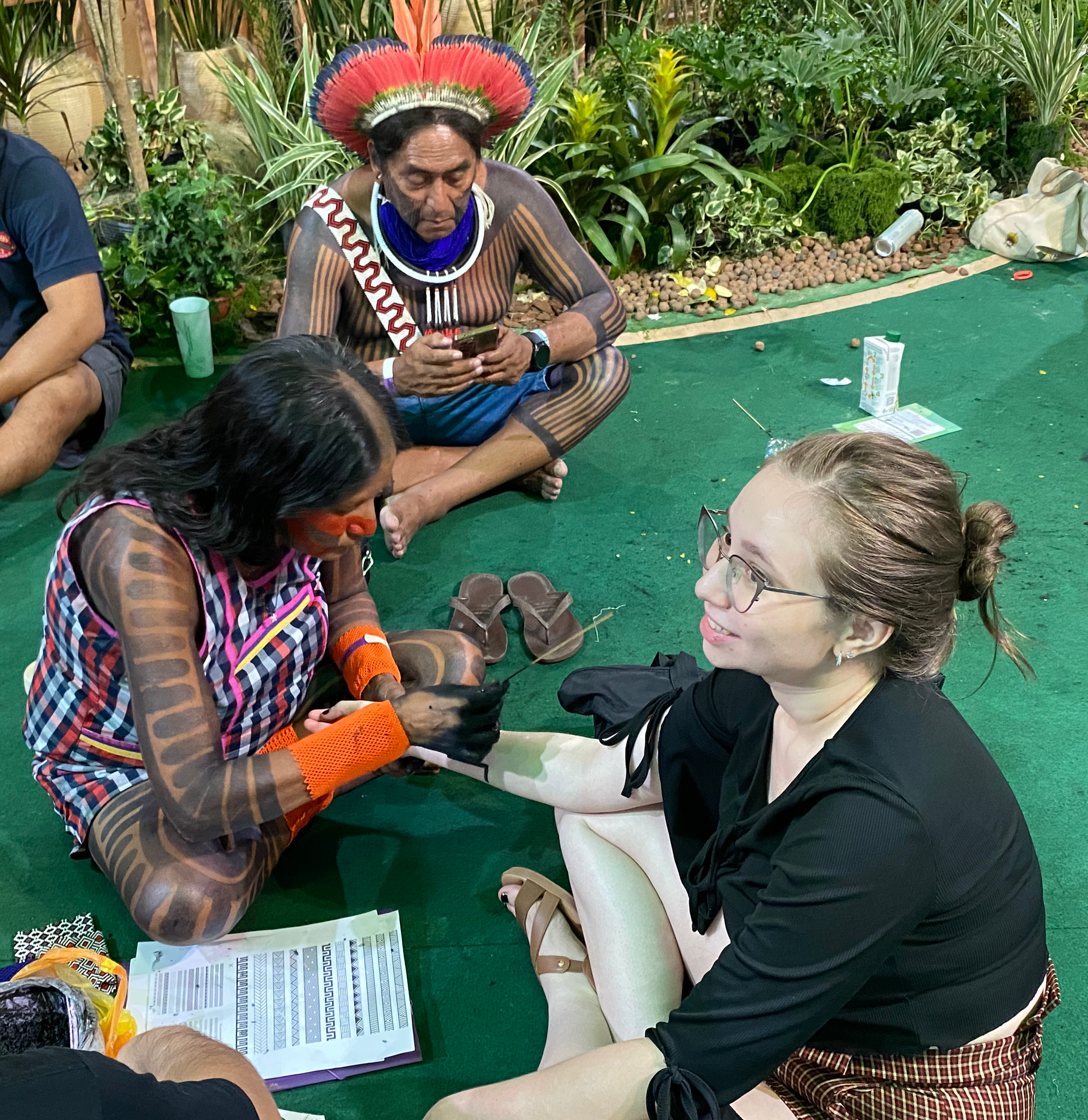
The people of Para were very welcoming. A recent medical school graduate from western Para told me she never dreamed that her province would host such an important international meeting.
Impressions of COP30
COP is always a high energy gathering of people sincerely dedicated to solving the climate crisis. The venue was huge, with a tent-hallway that felt like the inside of a giant snake (snakes also showed up).
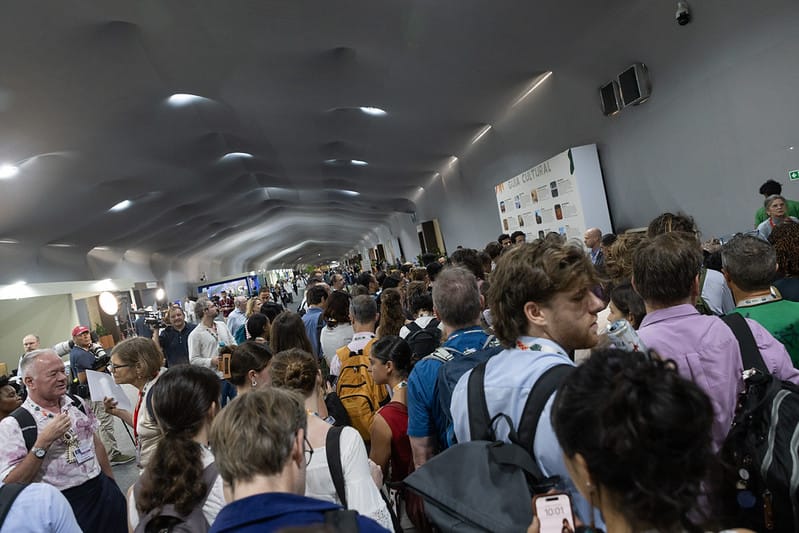
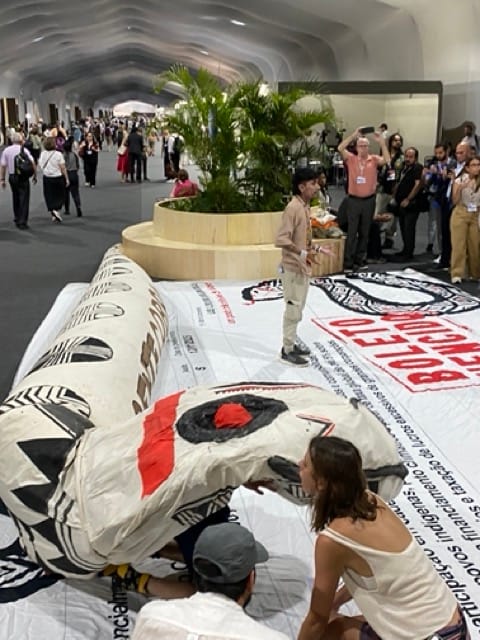
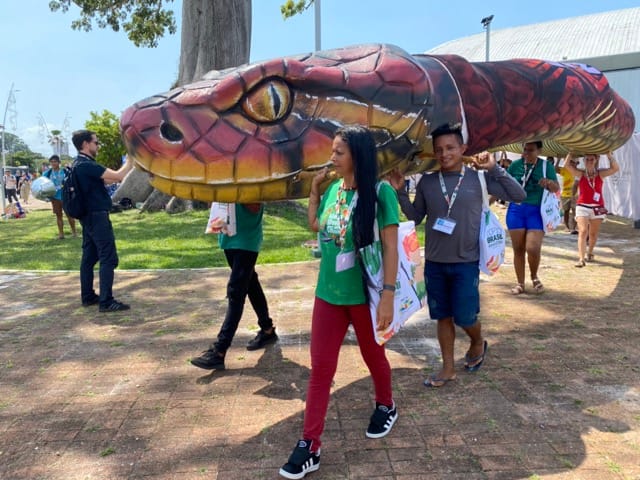
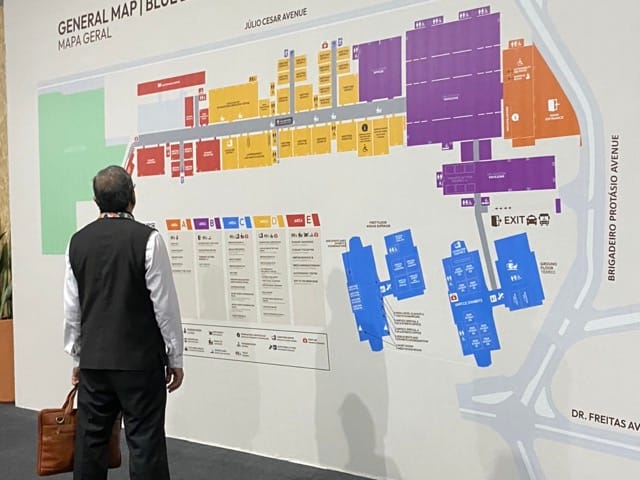
Snakes in and around the venue. left top photo UNFCCC; center and right mine.
Who was, and wasn't, at COP
COP30 was characterized by the largest ever representation of Indigenous Peoples as delegates, facilitated by Brazil's dynamic Minister of the Environment and Climate change, Marina Silva and Sônia Guajajara, Minister for Indigenous Peoples. Brazil also highlighted "people of African descent" who were mentioned in COP documents for the first time.
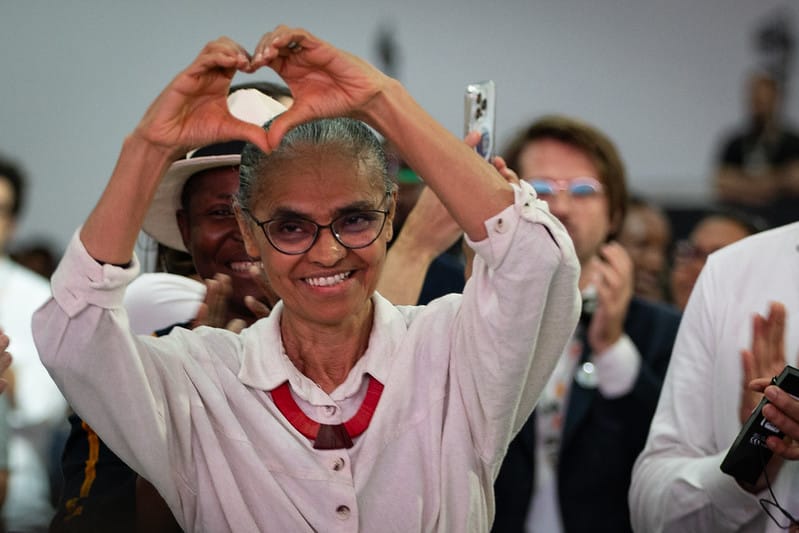
Over 50,000 delegates were registered to attend.
The United States had no official delegation at COP30, no negotiators, no seat at the table. But Americans were very present as observers.
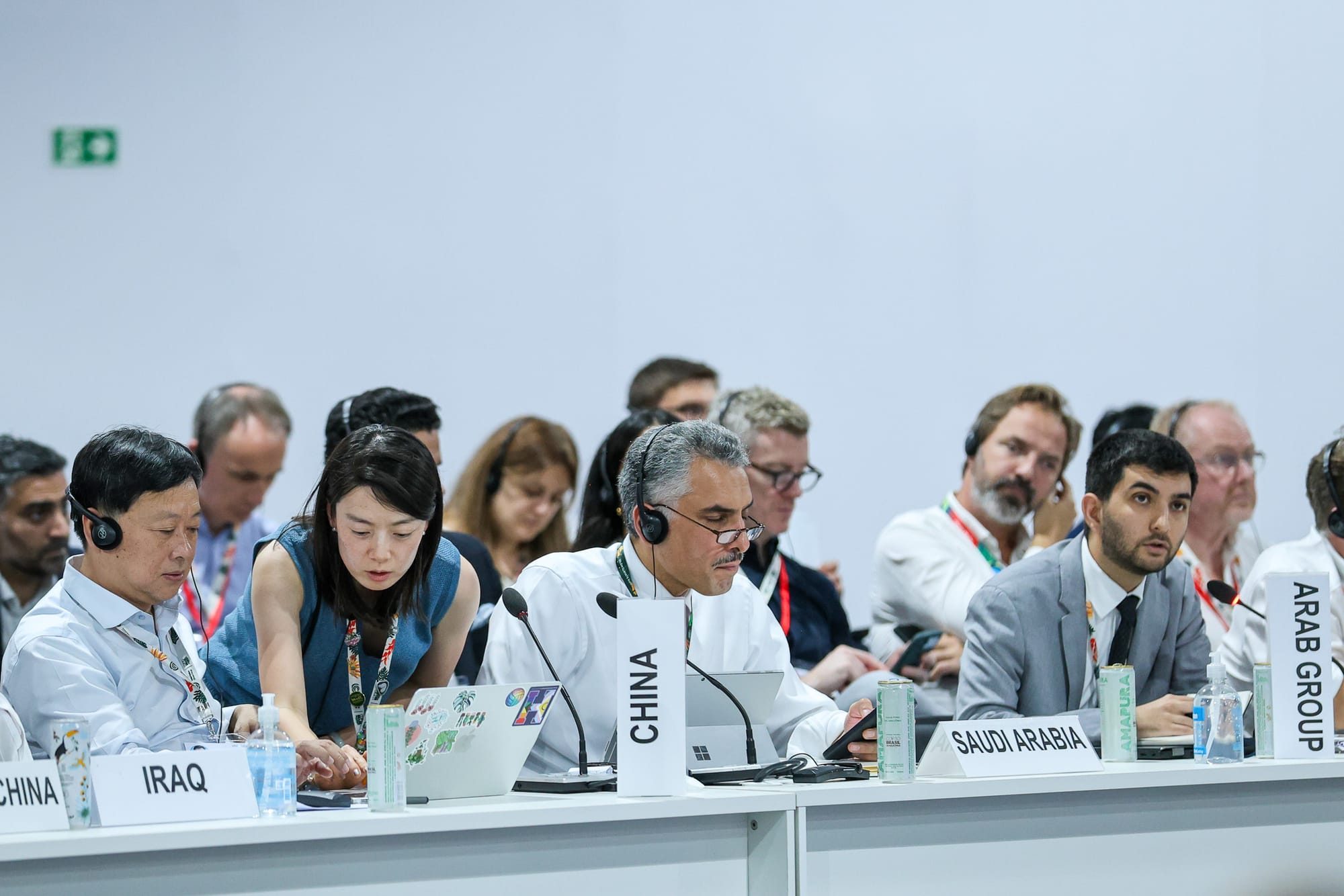
Sub-national officials (governors, mayors) were active at The Climate Registry pavilion (Of course, the U.S. did not host a pavilion this year.) California Governor Gavin Newsom appeared at several events (acting suspiciously proto-presidential). Congresspeople who intended to come were held up by votes on the government shutdown. However, long-time climate supporter Senator Sheldon Whitehouse made an appearance. In addition, many former members of the U.S. negotiating team were present, and generously shared their experience with students in a lively session.
Politically, the absence of the U.S. left a gap in the formal negotiating sessions. On the one hand, negotiators were happy to not have to contend with the kind of bullying that characterizes our current administration. On the other hand, historically, the U.S. has been a strong and consistent voice for science, and often a broker to help parties reach consensus. In the technical sessions several parties raised concerns that critical U.S. data will become unavailable. NASA, NOAA, DOE, and other agencies have historically provided robust, reliable data for early warning systems, climate modeling, risk assessment, and other purposes.
The U.S. retreat from the Paris Agreement was called out (indirectly) in the final Mutirão document, which
Recalls the rapid entry into force of the Paris Agreement on 4 November 2016 and expresses hope that the Agreement will once again enjoy near universality.
The U.S. is the only party to have withdrawn from the agreement (twice). Certainly, the U.S. will not be seen as a trustworthy climate partner for a very long time.
Peoples' Plenary
The Peoples' Plenary has become a COP tradition and gives an opportunity for observers, especially youth, to express their views. It brings a focus on justice and equity, with many delegates speaking about the impacts of wars.
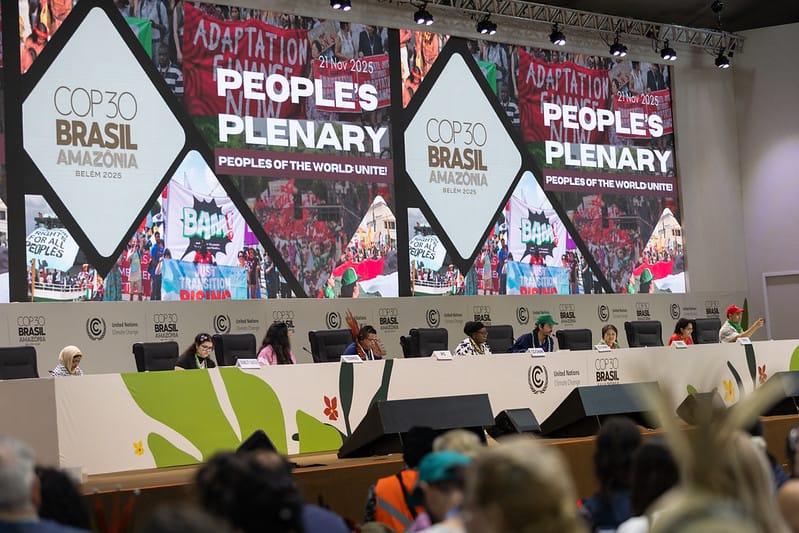
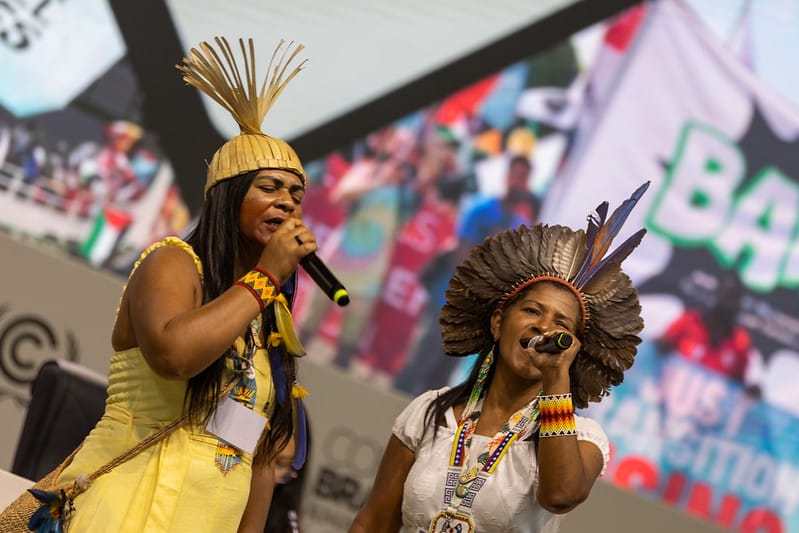
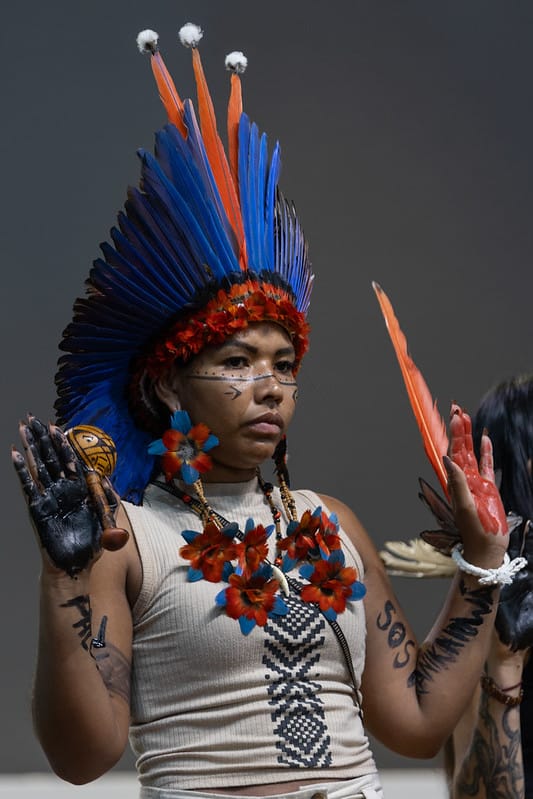
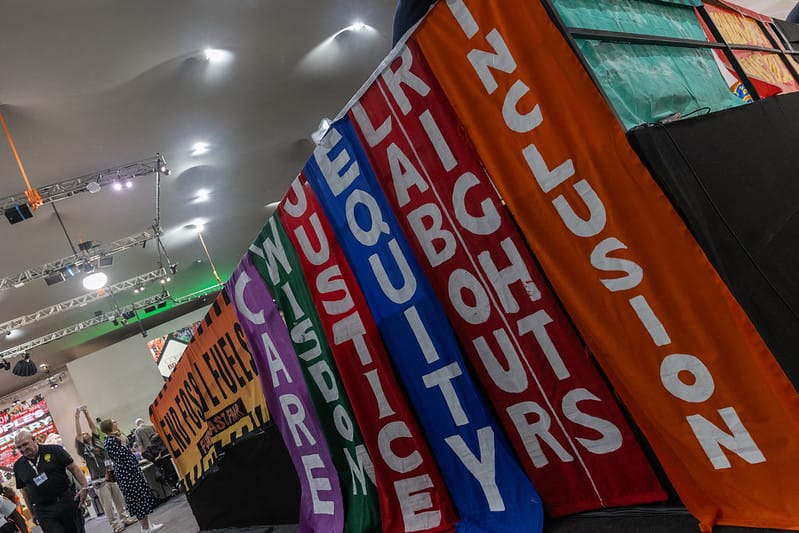
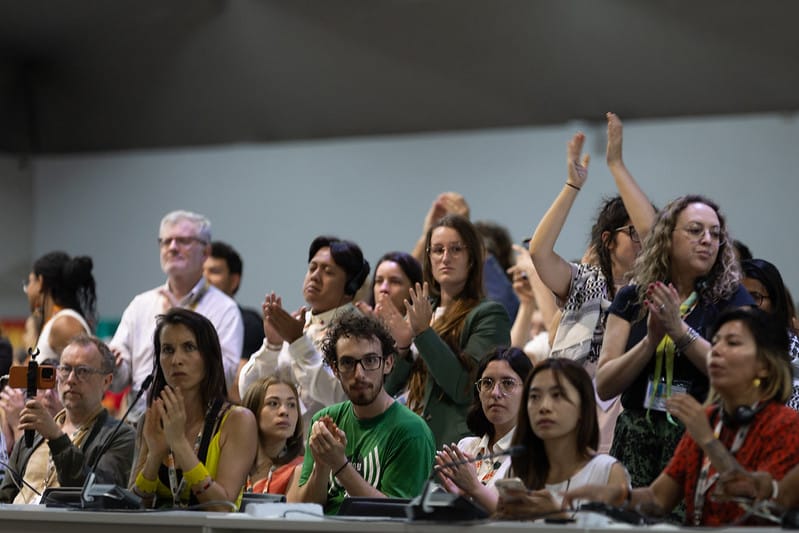
photo credit: UNFCCC
COP30 Outcomes
Mutirão
The most visible political outcome document from COP30 is the Global Mutirão: Uniting humanity in a global mobilization against climate change.
Though this year's document does not break much new ground, it does contain a strong endorsement of the Paris Agreement on its tenth anniversary. The Mutirão
Strongly reaffirms its commitment to multilateralism and the principles and provisions of the Paris Agreement and resolves to remain united in the pursuit of efforts to achieve the purpose and long-term goals of the Agreement with a view to delivering climate action and support for people and the planet;
It further
Acknowledges that significant collective progress towards the Paris Agreement temperature goal has been made, from an expected global temperature increase of more than 4 °C according to some projections prior to the adoption of the Agreement to an increase in the range of 2.3–2.5 °C and a bending of the emission curve based on the full implementation of the latest nationally determined contributions, while noting that this is not sufficient to achieve the temperature goal;
Reducing Emissions
To date 121 countries have submitted their updated "Nationally Determined Contributions" (NDCs), which are their commitments to reduce emissions through 2025. (The Biden administration submitted ours in December 2024.) These commitments, if countries follow through, would result in warming of about 2.6 °C by 2100. While celebrating progress, there is broad acknowledgement that the world has to do better.
Roadmaps
Countries pushing for enhanced action were ultimately unsuccessful in getting commitments for a "roadmap away from fossil fuels" and a "road map to end deforestation". However, the plan is not dead, just deferred; Brazil is determined to make progress on these important issues during the next year.
Just Transition
The Just Transition is about ensuring that climate progress does not come at the expense of human and labor rights. The approved "mechanism" was a victory for COP30.
“The just transition mechanism comes with the most progressive rights-based framing we have ever seen in a COP decision. For the first time, labour rights, human rights, the right to a clean environment, ‘free, prior and informed consent’ and the inclusion of marginalised groups are all recognised as core to achieving more ambitious climate action…This is our victory, carved out despite all odds.” Anabella Rosemberg, senior advisor on just transition at NGO umbrella group CAN International
Brazil also convened the first ever Global Ethical Stocktake to highlight that climate actions must be driven by fairness and inclusion.
Finance and Trade
COPs are increasingly about climate finance. Who is going to pay for poor countries to develop cleanly, who will pay for adaptation, and who will pay for losses caused by climate change? Countries that did nothing to bring about this crisis think rich countries should pay. Rich countries are leery of asking their taxpayers to foot the bills and want private finance to be part of the mix. Meanwhile previously "developing" countries, such as China, are under pressure to contribute more.
One outcome of COP30 is a goal to triple adaptation finance by 2025.
Many countries are worried that climate action could be used as an excuse to impose trade restrictions. For example, the EU will impose a "carbon border adjustment mechanism" (CBAM) tariff on imported products starting in Jan 2026. This issue was discussed at COP30 with no concrete outcome.
Women and Gender
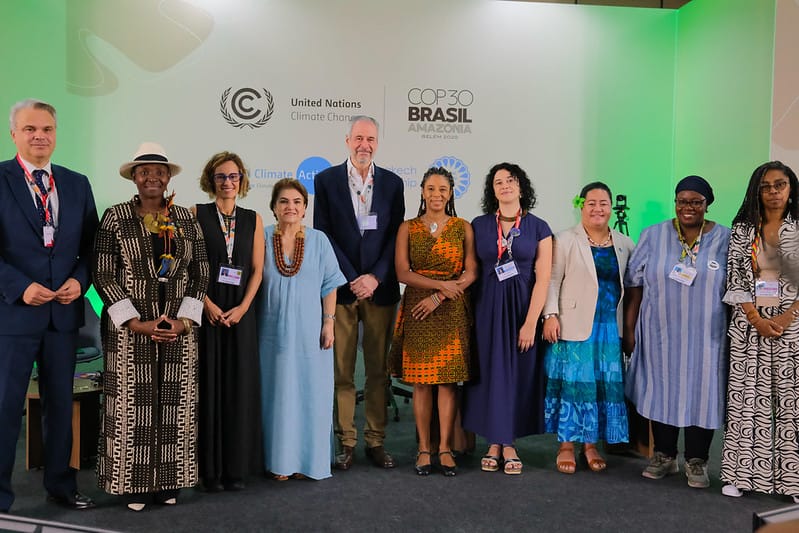
The Women and Gender constituency is very active at COP. This year a Belém Gender Action Plan was approved to enhance women's leadership, collect data and understanding of differential climate impacts and opportunities, and promote gender-responsive solutions.
Forests and Ocean
A number of actions outside of the main negotiations promised more protection for forests, including Brazil's Tropical Forests Forever Facility (TFFF), and efforts on wildfires, land tenure, and sustainable forest bioeconomy. Meanwhile the "High Seas Treaty" to protect biodiversity in international waters will go into effect in January.
Focus on Solutions
This was a "COP of implementation" and many important actions were outside of the negotiation spotlight. For example,
the COP30 Action Agenda inaugurated a framework capable of mobilizing civil society, businesses, investors, cities, states, and countries
to implement change. Check out their collection of organizations and actions across the spectrum from Creatives for Climate to the Utilities for Net Zero Alliance. They include specific Plans to Accelerate Solutions.
Overall
Progress to avert the worst effects of climate change is frustratingly slow, yet steady and accelerating. Gaining consensus of the whole world is hard, but it's working. National, regional, and local policies put in place in response to the Paris Agreement are driving an incredible energy transition that now has its own momentum. The recognition that this is the biggest challenge that humans have ever faced has unleashed extraordinary ingenuity and creativity that has changed the trajectory.
The modern electrotech revolution is beginning to drive fossil fuels to extinction. The world can prevent the worst effects of climate change. I hope the U.S. will be a contributor instead of an impediment.
COP30 References
- WRI COP30 summary. https://www.wri.org/insights/cop30-outcomes-next-steps
- Carbon Brief detailed summary of COP30 key outcomes. https://www.carbonbrief.org/cop30-key-outcomes-agreed-at-the-un-climate-talks-in-belem/
- 900 Indigenous delegates at COP30. https://news.un.org/en/story/2025/11/1166373
- Brazilian Indigenous mobilization; 360 Indigenous leaders credentialed for COP30. https://cop30.br/en/news-about-cop30/coparente-cycle-brazil-holds-largest-indigenous-mobilization-ever-for-a-climate-conference
- African descendants https://sumauma.com/en/a-cop-de-belem-pode-incluir-pela-primeira-vez-direitos-dos-afrodescendentes-em-documentos-do-clima/
- UNFCCC NDC Registry https://unfccc.int/NDCREG
- NDC Tracker https://www.climatewatchdata.org/ndc-tracker
- Climate Action Tracker https://climateactiontracker.org/publications/warming-projections-global-update-2025/
- Roadmap away from fossil fuels, who was for and against. https://www.carbonbrief.org/revealed-leak-casts-doubt-on-cop30s-informal-list-of-fossil-fuel-roadmap-op
- Climate Trace, track sources of emissions. https://climatetrace.org/
- COP30 official documents. https://unfccc.int/documents?f%5B0%5D=conference%3A4690
- Belém Gender Action Plan https://unfccc.int/sites/default/files/resource/cp2025_L16adv.pdf
- Global Mutirão: Uniting humanity in a global mobilization against climate change. https://unfccc.int/documents/655095
- High Seas Treaty. https://news.un.org/en/story/2025/09/1165901
- The modern electrotech revolution is beginning to drive fossil fuels to extinction. https://ember-energy.org/latest-insights/the-electrotech-revolution/#full-slidedeck
- UNFCCC COP30 photo albums. https://www.flickr.com/photos/unfccc/albums/
Back to our regularly scheduled programming
When and Where to Speak UP
Check the calendar for details.
Top billing this week:
Houghton County resolution "to declare that there are only two sexes."
- Houghton County Commissioners, Tuesday, December 9, 6 pm. County Courthouse.
- The agenda includes a resolution "to declare that there are only two sexes." (attached below)
- Keweenaw Indivisible is organizing a response. They will gather at 5 pm in front of the courthouse, and invite people to speak during the public comment period.
Other upcoming meetings

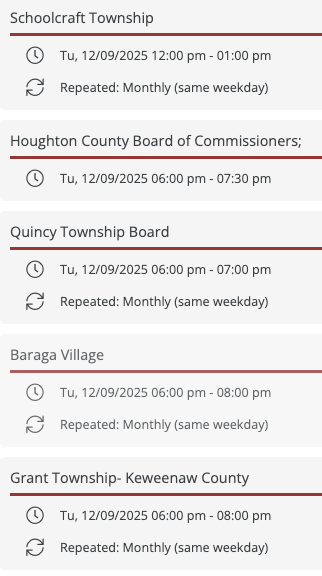
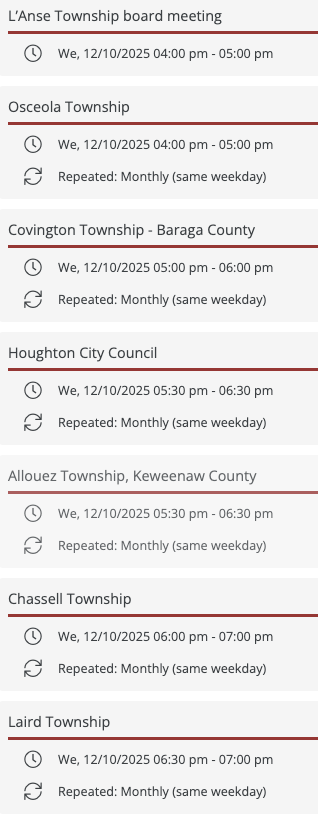
Some public body meets somewhere every single week; take 30 minutes to show up and express your opinion. (Sample statements.) And let me know if you go and what you learn.
Remember, this is a long process. Showing up multiple times builds trust and demonstrates to people with diverse viewpoints that you don't have horns.
Why and how to attend local meetings
Organizational Meetings
Details are on the CALENDAR. (Please send updates, check to confirm.) These groups are all very welcoming. Drop by a meeting to connect with friendly faces. Any level of engagement contributes to making our world better.
Houghton/Hancock
- Yoopers for Ukraine 🇺🇦 Rally at the bridge Wednesdays at 5 pm.
- Keweenaw Indivisible meets 2nd and 4th Tuesdays, 6-8 pm at the KUUF.
- CANCELED Dec 9th for the HoCo meeting
- Houghton County Dems meet every 1st Wednesday, 7 pm at the Super 8.
- 4th Wednesdays AWAVE, 6 pm. Gathering at KUU Fellowship Houghton.
- 3rd Sundays, 7-8:45 pm, Keweenaw Against the Oligarchy Monthly Action Committee (KATO). Please register at the link to help with the headcount.
Baraga
- Baraga County Democrats, 3rd Tuesdays at 6 pm, L'Anse Township Hall
Marquette
- Every Tuesday evening at 7pm, Yoopers Unite, a gathering of local pro-democracy groups, at LoveMarq Church, 728 W. Kaye Ave, Marquette.
- Marquette: Every Saturday morning from 11:30-12:30, between 40 - 80 people have been assembling at the Marquette Post Office, standing in support with long-established Citizens for Peace & Justice.
- Join Lake Superior Region Indivisible
📎 Paper Clip Protest 📎
It's a thing! Wear a paper clip, cheap, easy, recognizable. Know your tribe. Inspired by the Norwegian resistance during WWII. Promoted by Ollie and Janice Pedersen, and E. Jean Carroll, and recently amplified by Joyce Vance.

Thanks for all your support and all your efforts to support and expand freedom, justice and democracy!
Stay Well
Sarah
This FAQ page answers common questions about CRAG.